

Why the Minelab EQUINOX Is Perfect for Beach and Water Hunting

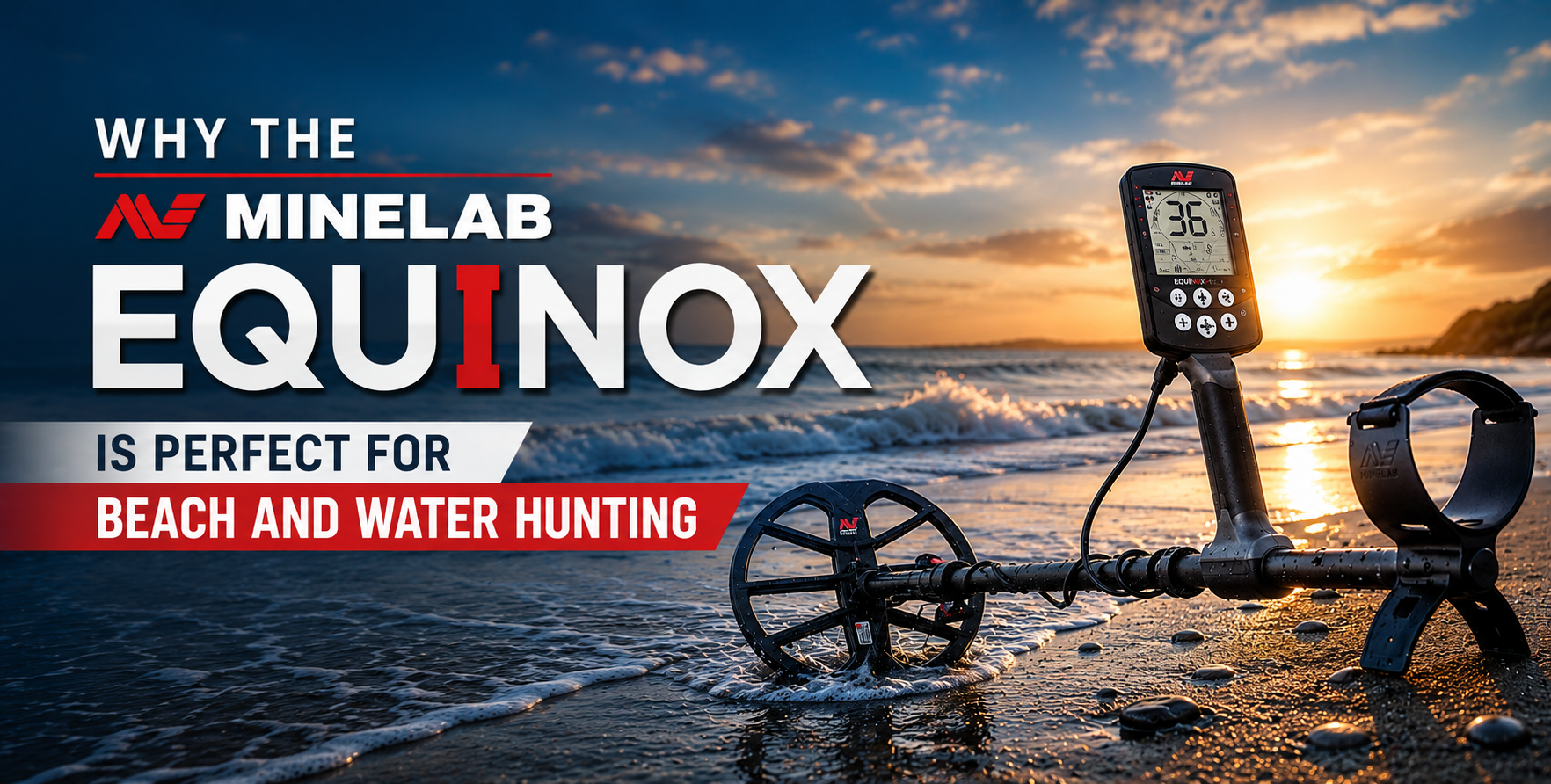
The Beach Is Where Most Detectors Give Up—The EQUINOX Does Not
The sun drops towards the horizon as waves roll across the search coil. Wet sand shifts beneath your feet, salt water surrounds the detector, and then a clean signal cuts through the sound of the surf.
Beach detecting looks peaceful, but it creates some of the toughest conditions a metal detector can face. Conductive salt water, mineralised black sand, and constantly changing ground conditions can make ordinary machines unstable. False signals become common, while genuine targets are easily missed.
The Minelab EQUINOX handles these conditions differently. Its simultaneous multi-frequency technology, dedicated Beach modes and submersible construction make it a dependable choice for dry sand, wet shorelines and underwater searches.
Metal Detector: How It Works and Why Salt Water Is the Ultimate Test
To understand its beach performance, it helps to know how a metal detector works.
The search coil sends an electromagnetic field into the ground. When that field encounters metal, the object creates a response that travels back to the detector. The control unit analyses this response and provides an audio tone and Target ID.
Salt water also conducts electricity. To a basic detector, wet salt and mineralised sand can resemble a widespread metallic target. This causes chatter, unstable numbers and false signals whenever the coil touches the sand or enters the surf.
A serious beach detector must separate this environmental response from the signal created by an actual coin, ring or relic.
Multi-IQ: The Metal Detector Sensor Technology Behind the Performance
Minelab’s Multi-IQ technology processes multiple frequencies simultaneously rather than forcing the operator to select only one.
Different frequencies respond differently to various targets. Lower frequencies generally favour larger, highly conductive objects, while higher frequencies provide greater sensitivity to smaller or lower-conductive targets.
By analysing several frequencies together, the metal detector sensor can maintain a more stable picture of the ground while remaining responsive to jewellery, coins and other recoverable objects. You do not need to keep changing frequencies as you move from dry sand into wet, conductive areas.
In practice, this means less time adjusting the machine and more time investigating repeatable signals.
Waterproof Build and Interchangeable Coil Options
Waterproof capability varies across the series. The EQUINOX 600 and 800 are submersible to 3 metres, while the newer 700 and 900 models carry an IP68 waterproof rating to 5 metres.
That makes the range suitable for:
- Dry and wet sand detection
- Shallow-water recovery
- Riverbank and lakeside searches
- Surf and underwater hunting within the model’s rated limit
The 700 and 900 also use a compact carbon-fibre shaft system. Interchangeable coil options allow hunters to choose a smaller metal detector module for target separation or a larger coil for broader coverage on open beaches.
Always confirm the waterproof rating of your exact model before entering deep water.
Beach 1 vs Beach 2: Which Mode Should You Use?
Beach 1 is a practical starting point for dry sand, damp sand and relatively stable shoreline conditions. It provides good sensitivity while handling mild salt interference.
Beach 2 is designed for more difficult conductive conditions. Use it when the coil enters wave wash, shallow salt water or heavily mineralised black sand. It normally provides better stability in the harshest areas, although extremely difficult ground may require a slight reduction in sensitivity.
Keep the coil level, move at a controlled pace and investigate signals that repeat from more than one direction. In most beach conditions, the preset modes provide a reliable starting point without complicated manual ground adjustments.
Is It Right for Your Beach Hunt?
The EQUINOX deserves consideration when you:
- Regularly search wet sand or shallow surf
- Encounter salt interference or mineralised black sand
- Want one detector for beaches, parks and fields
- Need full submersion rather than splash resistance
- Prefer Multi-IQ performance without constant frequency changes
- Want genuine Indian warranty and technical support
Final Thought
The tide does not wait. Productive ground can disappear beneath the next wave, so your detector must remain stable when conditions change.
A genuine machine also matters. Purchasing through Gold Detector India gives buyers access to authentic Minelab equipment, suitable configuration guidance and the applicable three-year manufacturer warranty for the control box and coil.
Visit GoldDetectorIndia, India’s authorised Minelab dealer, to explore the series, compare models or contact us before your next shoreline hunt.
Frequently Asked Questions
1. Is the Minelab EQUINOX good for beach hunting?
Yes. Its Multi-IQ technology and dedicated Beach modes help reduce false signals in wet sand and salt water.
2. Is the Minelab EQUINOX waterproof?
Yes. The EQUINOX 600 and 800 are waterproof to 3 metres, while the 700 and 900 are waterproof to 5 metres.
3. Which Beach mode should I use?
Use Beach 1 for dry or damp sand and Beach 2 for wet sand, surf, and highly mineralised areas.
4. Can the EQUINOX find gold jewellery on beaches?
Yes. It can detect gold rings, chains, coins, and other jewellery, depending on size, depth, and ground conditions.
5. Does the EQUINOX work in salt water?
Yes. Multi-IQ technology helps the detector remain stable in conductive saltwater environments.