

Best Metal Detector for Red Soil & Mineralised Ground in India

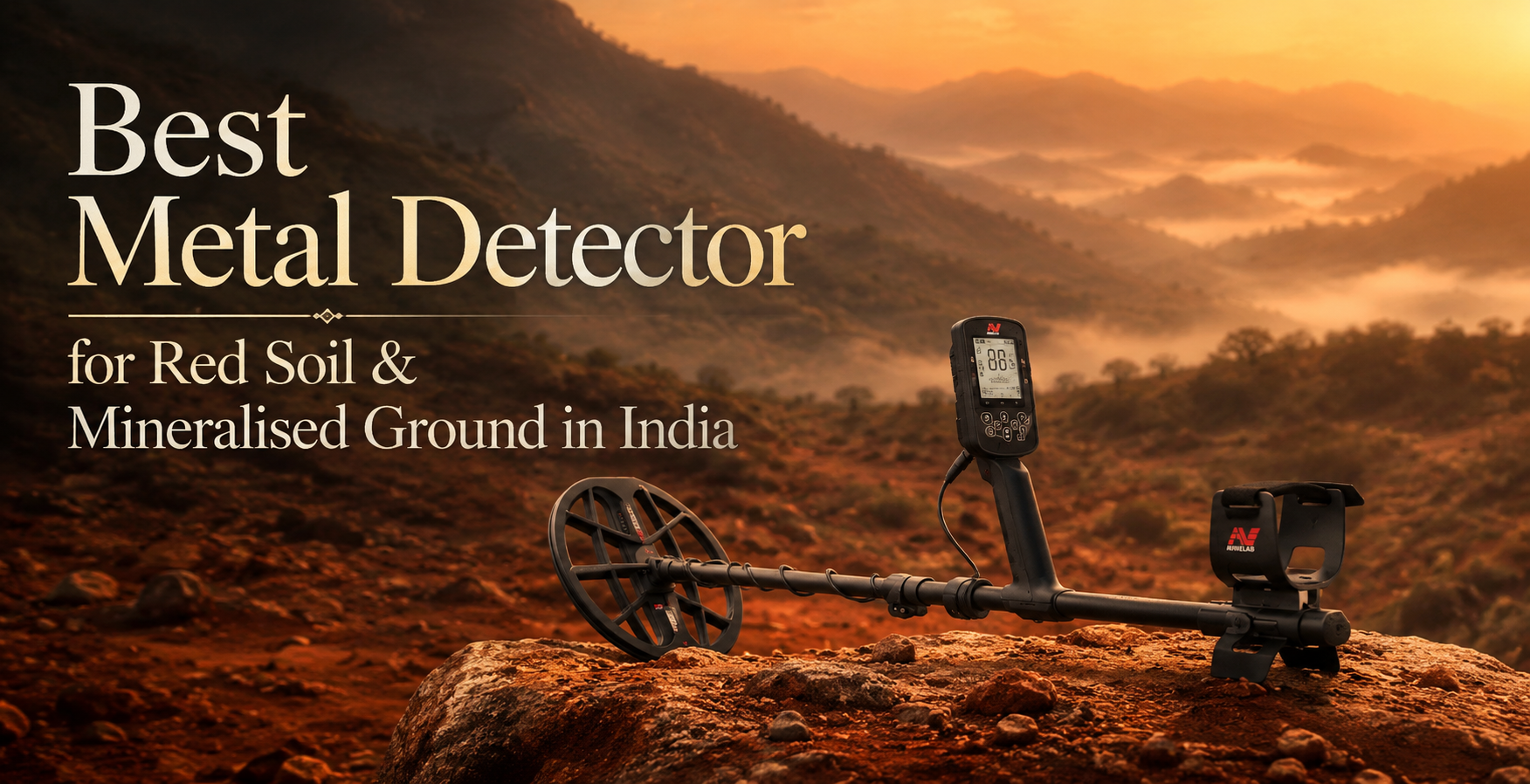
If you have ever used a metal detector across the red soil of Telangana, Karnataka or Andhra Pradesh, you may have noticed something frustrating: constant signals even when there is nothing worth digging.
That does not necessarily mean your detector is faulty. Red and laterite soils can contain high levels of iron minerals, which may interfere with a detector’s response. In difficult ground, choosing the right machine and setting it up correctly can make a major difference.
Why Red Soil Causes False Signals
A metal detector sends an electromagnetic field into the ground and analyses changes caused by metallic objects. Highly mineralised soil can also influence that field.
When the detector cannot separate ground mineralisation from a genuine target, you may experience:
- Frequent false signals
- Unstable Target ID numbers
- Reduced sensitivity
- Valuable targets being masked by ground noise
This is why a detector that performs well in parks or mild soil may behave very differently on iron-rich Indian terrain.
Ground Balance Matters More Than You Think
Ground balance helps the detector compensate for natural minerals in the soil.
For red-soil hunting, this feature should be one of your first priorities. Automatic ground tracking is convenient because the detector continually adjusts as conditions change, while manual ground balance gives experienced users more control.
In practice, a properly balanced ground metal detector usually gives a cleaner and more stable response than a basic machine running without effective ground compensation.
Which Detector Technology Works Best?
Different technologies handle mineralisation differently.
Single-frequency VLF detectors can work well in mild conditions and are generally easy to use. However, heavy mineralisation may reduce their stability.
Multi-frequency detectors analyse targets across multiple frequencies and are often a strong choice for moderate mineralisation. They also provide excellent versatility if you search for coins, jewellery, relics and gold across different environments.
Pulse Induction detectors are commonly chosen for highly mineralised goldfields because they can remain more stable in difficult ground conditions. They are especially useful when gold prospecting is the main objective.
Minelab Options for Red Soil
EQUINOX Series
The Minelab EQUINOX range is a practical all-round choice for users who search more than one type of terrain. Its Multi-IQ technology and ground-balancing controls make it suitable for mineralised ground while retaining strong performance in parks, fields and beaches.
For buyers wanting metal detectors for gold and silver, the EQUINOX range provides a useful balance between prospecting capability and general treasure hunting.
Minelab MANTICORE
MANTICORE is designed for detectorists who want more detailed target information and greater control in challenging conditions.
Its Multi-IQ+ platform, adjustable ground balance and advanced target identification make it particularly attractive for sites containing both mineralisation and heavy iron contamination.
It is a strong option for experienced users who regularly encounter difficult Indian soil.
Minelab GPX Series
For serious gold prospecting in highly mineralised terrain, the GPX series takes a more specialised approach using Pulse Induction technology.
A Minelab GPX can be an excellent gold detector for users working difficult goldfields where conventional VLF machines may struggle. However, it is more specialised than an EQUINOX or MANTICORE, so buyers should choose it primarily when gold prospecting is the main objective.
Do You Need a Waterproof Detector?
It depends on where you search.
A waterproof metal detector becomes valuable if your detecting sites include riverbanks, wet fields, shallow water or coastal areas. This is particularly relevant during India’s monsoon season, when previously dry locations can quickly become wet.
Quick Buying Checklist
Before choosing a detector for mineralised ground, check:
- Automatic, manual or tracking ground balance
- Multi-frequency or Pulse Induction technology
- Waterproof rating if you search around water
- Target identification and iron discrimination
- Availability of genuine warranty and service
- Whether the detector matches your actual search targets
Do not choose purely by advertised depth or price. Ground conditions often matter just as much.
Final Takeaway
The best metal detector for red soil is the one that remains stable when mineralisation becomes difficult.
For versatility, the EQUINOX series is a strong all-rounder. MANTICORE gives advanced users greater target information and control, while the GPX series is better suited to serious gold prospecting in extreme mineralised ground.
Before buying, consider your soil, target type and experience level. GoldDetectorIndia.com can help you compare genuine Minelab models and choose a machine suited to Indian detecting conditions.
Frequently Asked Questions
Why does my metal detector beep constantly in red soil?
Iron-rich mineralisation can create responses that resemble metal targets. Correct ground balancing can significantly improve stability.
Which Minelab detector is best for mineralised soil?
EQUINOX and MANTICORE are strong, versatile options, while GPX models are better suited to severe mineralisation and dedicated gold prospecting.
Do I always need Pulse Induction for red soil?
No. Moderate mineralisation can often be handled effectively by a capable multi-frequency detector.
Is MANTICORE suitable for red soil?
Yes. Its Multi-IQ+ technology and adjustable ground balance make it well suited to challenging and mineralised sites.
Should I buy or rent a detector first?
If you are completely new, renting can help you understand the hobby. Regular users usually gain better long-term value from buying a genuine detector with warranty support.